
Welcome to Heat Sealers Direct
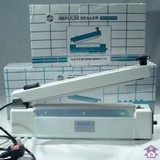 At HeatSealers.co.uk we aim to find the best quality heat sealers at a price that is
right for you.
At HeatSealers.co.uk we aim to find the best quality heat sealers at a price that is
right for you.
Heat sealing machines are available in a wide variety ranging from simple impulse heat sealers that cost less that a hundred pounds to automated continuous heat sealing machines selling for tens of thousands. Heat sealing is relatively fast and has therefore been a system largely used for packing everything from screws and bolts to sweets and potato chips.
We hope to be able to help you find all the information you need about heat sealers here but if you still have any questions please don't hesitate to contact us.
Remember to check our for the best prices on polythene impulse heat sealers and layflat tubing.
What do the general public say about impulse heat sealers
A statement issued here said that following the chief minister directives, district authorities started comprehensive crackdown throughout the province. It said that two plastic bag manufacturing factories were sealed in Town-111 area of Peshawar and three factories were sealed in industrial area of Hayatabad whereas all wholesaler and retailer shops of polythene suppliers bags were closed in the provincial capital.
Description : We specialises in wholesale bags, woven polypropylene bags, sand bags, hessian bags & garden bags, all manufactured in United Kingdom. Contact us (07) our telephone
Impulse bag sealers occupy a rather practical niche on the packing bench: not glamorous machinery, nevertheless the sort of proper kit that determines whether a consignment leaves as saleable stock or returns as a claims note. The better hand-operated units apply heat only for the brief dwell period of the seal cycle, so energy is not squandered in maintaining a permanently hot jaw; that matters in small-batch work, secondary bagging and rework cells where intermittent use is the norm. The engineering sits in the balance between element temperature, dwell time and jaw pressure, particularly when sealing polythene suppliers with variable gauge, laminated pouches, or anti-static films where surface resistivity and layer building can alter heat transport. A clean weld bead is not merely cosmetic it governs air ingress, moisture resistance and pack integrity below compression on the pallet, particularly when volumetric efficiency is being pushed and cartons are stacked tight. Poor melt-flow consistency shows up fast as channel leaks, scorched edges or seals that peel below modest handling loads; a properly set impulse cycle mitigates that without adding unnecessary tare weight through above-bagging. There is also a circular economy angle often missed at bench level: proper sealing assists thinner mono-material films, reduces reject stock, and avoids the concealed amortised energy of repacking failed products further down the line.
Impulse heat sealers sit at an awkward nevertheless productive junction between laboratory validation and production discipline: on the bench they expose seal-window behaviour in a method that continuous machinery often masks, while in a pilot plant they expose whether a proposed laminate, lidding film or rigid polythene suppliers-derived tray will tolerate proper handling rather than idealised trials. The engineering trouble is seldom the closing of the jaw itself; it is the repeatability of thermal transport through micron-specific gauging, the recovery time of the element, and the manner in which high-density polymer chains relax at the interface without embrittling the flange or squeezing product into the seal land. In part packs and thermoform blister formats, that narrow band of control governs leak integrity, peel character and downstream pack geometry, all of which feed back into volumetric efficiency, pallet stability and the amount of secondary bagging needed to retain a consignment presentable after road vibration and cross-dock handling. Static can be a quiet nuisance here, particularly with light-gauge films and dry occupy media; surface resistivity affects web tracking, particulate cling and select-face efficiency once the finished stock reaches the warehouse. The better specified impulse heat sealers so tend to be judged less by headline jaw width than by dwell accuracy, pressure distribution, melt-flow consistency and compatibility with mono-material structures that can transport back into a recycling stream without an extravagant separation burden. That is where the circular economy argument becomes practical rather than decorative: a seal robust enough to reduce rejects, yet controlled enough to avoid above-engineered laminate, lowers scrap at beginning-up, maintains tare weight discipline and spreads the amortised energy of forming and sealing across a pack that in reality survives the supply chain.
polythene suppliers heat sealers sit in that rather prosaic nevertheless highly consequential corner of warehouse engineering where film behaviour, operatour rhythm and load integrity meet. A sound seal is not merely a flattened strip of hot material; it relies on dwell time, jaw pressure and melt-flow consistency, particularly when low-density polythene suppliers tubing is being converted at the bench into manufactured-to-length bags. Micron-specific gauging matters here, since above-specified film adds tare weight and erodes volumetric efficiency, while below-gauged stock risks pinholing, seal creep and moisture ingress amid palletised handling. Cutter-equipped units reduce secondary trimming and improve select-face efficiency, though simpler bar sealers still suit short-dash packing cells where portability and fast changeover outweigh throughput. Automatic heat-up and cool-down cycles also remove much of the guesswork from repeat sealing, mitigating scorched film, weak seams and operatour-induced variance. In circular economy terms, the advantage is partly in restraint: clean mono-material polythene suppliers packs, sealed without labels, tapes or mixed substrates, remain easier to recover, while bag formation from tubing enables pack size to track the consignment rather than forcing null-filled normal sacks into the outbound flow.
More Manufacturers and Suppliers of Bag Sealing Tape
Bag sealing tape sees a modest consumable until it is judged on a packing line running mixed-gauge polythene suppliers bags, variable occupy weights and unforgiving despatch windows; then the engineering becomes rather less trivial. A credible manufacturer has to control adhesive coat weight, carrier film thickness and release properties within tight tolerances, because a few microns of drift can translate into poor wet-out on low-energy surfaces, flagging at the seal edge, or tearing amid secondary bagging. The better tapes are specified around melt-flow consistency and surface resistivity as much as tack, particularly where fine powders, textiles or light-gauge stock can generate static and compromise closure integrity. On the warehouse floor, proper bag sealing improves select-face efficiency and pallet stability by reducing rework, loose closures and distorted consignments; it also limits unnecessary tare weight, since a correctly engineered tape can replace heavier mechanical closures without sacrificing containment. Material selection now carries a second burden: mono-material compatibility with polythene suppliers sacks, cleaner separation in recovery streams, and feedstock discipline that retains recycled content from undermining adhesive performance. That balance between seal strength, unwind behaviour and stop-of-life practicality is where commodity tape becomes a properly specified industrial component.
Doboy B-450 Vertical Continuous Band Bag Sealer
Used Doboy Bag Sealer with: Speed spectrum: up to 500 inches per small Seal width: 0.5 inches Seal materials: Polyethylene Foil and paper laminates Poly/Tyvek pouches Most other heat Polybags
"Cellophane Bags Bulk
Cellophane Bags Bulk offers expert editour's reviews, user reviews and comments on the web's leading products and services. Last Ice Age Timeline
Layflat Tubing
Perfect to use with our heat sealers, our layflat tubing provides protection against dust and water amid transit or in storage. The plastic sleeve is manufactured from polymers of high quality, giving clarity and high strength.
Best Big polythene suppliers Bags Reviewed & Rated in 2019
You could see the Top big polythene suppliers bags of 2019 above. The lists of optimal items are updated regularly, so you can be sure that the information provided is up-to-date.
So What is a Heat Sealer?
A heat sealer is a machine used to seal product packaging using heat. Continuous heat sealers utilize heated moving belts. Impulse heat sealers use a stationary heated element. Good seals are a result of time, temperature and pressure.
Many industries use heat sealers to prepare products for sale, ranging in size from small businesses to large corporations which handle high volumes of material. Various styles and sizes are available from several companies which specialise in making heat sealers, along with the plastic bags to use with them.
Types of heat sealers
There are a few different kinds of heat sealing machines which are separated into two main categories:
- Continuous heat sealers
These are automatically operated heat sealers designed for continuous production runs. Products will be bagged, sent down the conveyor belt, will be sealed and then dropped into packaging boxes for shipment or storage. They feature a variable timer and a built-in film cutter. Continuous heat sealers are much larger and more expensive because of their greater sizes and higher volume capacity.
- Impulse heat sealers
With a single element and are generally designed for manual use. Some are partially automated. Impulse heat sealers range in price, with simple desktop versions being very affordable.
Impulse Bag Sealers
 Impulse bag sealers or impulse heat sealers work by releasing a short burst of
electricity through a resistance wire that will bring a polythene bag, or other plastic
materials, to its melting point and welding both sides together.
Impulse bag sealers or impulse heat sealers work by releasing a short burst of
electricity through a resistance wire that will bring a polythene bag, or other plastic
materials, to its melting point and welding both sides together.
Impulse heat sealers won't get hot by just plugging them in. It will remain cool until you bring the sealers jaw to contact with the plastic film.
There are several types of impulse bag sealers which can be categorised into three different types of operations:
- Hand operated sealers

 Activated by the placing plastic film or layflat tubing
between the jaws and pressing the upper jaw down to come in contact with the material,
Usually available as tabletop models. Some are also available with a sliding cutter that
can be used once the bag has been seald. Just slide the cutter with the opening jaw still
closed to have the remaing polythene film cut off.
Activated by the placing plastic film or layflat tubing
between the jaws and pressing the upper jaw down to come in contact with the material,
Usually available as tabletop models. Some are also available with a sliding cutter that
can be used once the bag has been seald. Just slide the cutter with the opening jaw still
closed to have the remaing polythene film cut off.
- Foot operated sealers
 Usually free standing units that are mounted on a pedestal. The upper jaw will be drawn
when the operator depresses the pedal leaving both the operator's hands free.
Ideal for sealing polypropylene as they provide constant heat, required to seal this
types of plastic, creating a wide crimp seal.
Usually free standing units that are mounted on a pedestal. The upper jaw will be drawn
when the operator depresses the pedal leaving both the operator's hands free.
Ideal for sealing polypropylene as they provide constant heat, required to seal this
types of plastic, creating a wide crimp seal.
- Automatic impulse bag sealers
Normally tabletop heat sealers whose jaws are activated automatically by dial-controlled timers. This type of impulse bag sealer may also be manually operated when using an electrical foot switch. Like the pedal impulse sealers, both the operator's hands are left free.
Correct use of impulse heat sealers
For an optimal use of any impulse heat sealer the heating element timer must be set to produce enough heat to melt the packaging material for only an instant. The correct time is critical to the successful operation of any impulse bag sealer. If the heating timer is short it will result in a weak seal and the bag will tend to burst. If too long the plastic will 'burn' instead of melt and will also result in an inferior seal. Instructions on how to properly set the timer are normally found on your heat sealer's manual.
Impulse sealers are fast and efficient tools to securely seal many types of packaging materials but are not recommended for cellophane, laminated polypropylene or other cello -like materials that require the temperature set-point to be maintained for fixed periods of time.
Quality in a Heat Sealer
Heat sealing with a heat sealer is a good quick solution for a wide range of products and is a way to assure that a company's product will maintain its integrity to the point of use.
A heat sealer should be built on a robust platform to stand up to rigorous continuous use. In the case of impulse heat sealing, it should mechanically absorb the thermal environment away from the platen after heating and it should be built with good electronics that manage the temperature at the critical thermal environment. A quality heat sealer should also provide safety features to prevent injuries to the user.
The important thing in finding a quality heat sealer is not only to locate a company that provides a heat sealer that just uses time, pressure and heat to seal products but also to find one that is reliable for every seal.