
Welcome to Heat Sealers Direct
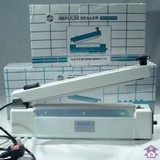 At HeatSealers.co.uk we aim to find the best quality heat sealers at a price that is
right for you.
At HeatSealers.co.uk we aim to find the best quality heat sealers at a price that is
right for you.
Heat sealing machines are available in a wide variety ranging from simple impulse heat sealers that cost less that a hundred pounds to automated continuous heat sealing machines selling for tens of thousands. Heat sealing is relatively fast and has therefore been a system largely used for packing everything from screws and bolts to sweets and potato chips.
We hope to be able to help you find all the information you need about heat sealers here but if you still have any questions please don't hesitate to contact us.
Remember to check our for the best prices on polythene impulse heat sealers and layflat tubing.
What do the general public say about impulse heat sealers
Heat Sealers
Heat sealers solve the basic problem of keeping flexible packs closed properly, particularly where fine powders, liquids, or sensitive samples would otherwise leak, evaporate, or select up pollution. A superb seal relies on the proper balance of heat, pressure, and dwell time, because also small gives a weak edge and also much can distort the film or burn through the seal area. In busy packing rooms, that means checking film type, gauge, and seal width rather than treating all bag the same. When the settings are proper, the pack stays sound through storage and handling, and the risk of spoilage or complaints drops sharply.
Plastic bag sealing
Bag sealing machinery requirements proper film control if printed carrier bags are to come off the reel with the print in the proper place and each bag cut to the same length. A photocell tracking the line label assists the machine read the printed web and retain register proper, which reduces waste and stops a batch looking uneven on the shelf or in the packing room. That matters with HDPE and LDPE T-shirt bags because both materials can shift slightly below heat and tension. When the seal and cut stay consistent, the finished bags stack better, dash faster through dispatch, and give less handling complaints.
Ezysafe Bag Sealer Sticks
A bag sealer is only as superb as the seal it leaves, particularly when packs are small and handled often. On light bags, the film can shift, wrinkle or picker up dust, so the sealing head requirements proper pressure and the operator requirements a repeatable routine. If the seal is also hot, the material can distort; if it is also cool, the closure may open in transit or on the shop floor. That makes the machine above a simple closing device. It is part of the control above product protection, presentation and waste, and a poor seal tends to cost time twice above.
Keyword Research: People who searched cellophane bags packaging suppliers also searched
Cellophane bags work optimal when clarity, stiffness, and sealability match the product being packed. For bakery items, sweets, and small desserts, a flat transparent bag shows the contents well while still giving a tidy retail stop, nevertheless the gauge has to be heavy enough to resist splitting when the pack is handled or tied off. Too light a film can crease badly, lose shape, or tear at the top corner amid filling, while a more stable grade retains the presentation tidy on shelf. Good packers also see for a clean twist tie closure because a poor closure lets the bag open up and spoils the see. A well-chosen bag protects the product without hiding it.
Layflat tubing works optimal when the material and gauge are chosen for repeated handling rather than only for easy storage. A coil that sees tidy in the yard can still fail badly if the polythene suppliers has also much fold memory, because all charge, drag and rewind stresses the same line until pinholing or seam fatigue beginnings to display. Consistent melt flow assists the tube stay flexible without turning brittle at the bends, which matters when it is being routed as a mainline, submain or lateral. Better wall control also retains pressure more even along the dash. The practical payoff is a hose that survives field movement instead of slowly turning minor damage into a leak problem.
Environmental Impacts And Dangers Of polythene suppliers bags in United Kingdom
polythene suppliers bags create a handling problem long before they become a litter problem, because the same light film that makes them easy to store and transport also makes them difficult to control once they escape the waste stream. Thin-gauge bags have plenty of toughness for their weight, so they survive rough treatment, blow around in the wind, and snag on fences, hedges and drainage grilles instead of breaking down neatly. That behaviour turns a simple packaging item into a drainage and sorting nuisance. The practical reply lies in better specification and tighter capture at origin, with mono-material film, sensible gauge selection and controlled secondary packing reducing loose escape. If the bag is kept clean and collected properly, it stays easy to recover.
Reclosable polypropylene bags work well because they stand up to repeated handling without losing their form or closure performance. The film's stiffness makes the bag easier to load, while transparent material assists stock pickers and packers see contents quickly on a busy bench or warehouse face. A superb reclose strip matters, nevertheless so does the method the bag opens, sits, and slides through a packing line without snagging. When gauge control is consistent, the bag retains a tidy square profile and avoids adding needless weight to the consignment. That makes secondary packing faster and assists finished loads stay tidy and stable through dispatch.
Posts Tagged ‘Impulse Bag Sealers’
Impulse bag sealers only work well when film gauge, dwell time and operatour rhythm are kept in step. The machine may see simple, nevertheless a small drift in any of those settings can turn a tidy weld into a weak or brittle seam that splits below load. That is why these sealers suit lines where low-density polythene suppliers one hour and heavier layflat the next need alternative treatment. The short burst of heat also cuts inactive energy use and assists keep safe the jaw assembly from constant thermal stress. Set correctly, the seal grasps cleanly and avoids the handling damage that comes from overcooked film.
Impulse Heat Sealers | Desk Top Poly
Hand operated impulse heat sealers suit light to medium packing work where bags need closing fast without wasting energy. The element only heats while the jaws are pressed together, so the seal is formed fast and the machine cools down again almost at once. That makes sense on busy packing benches where operatours are closing polythene suppliers bags, shopping packs, or small components in batches. Seal width matters because a narrow line may be fine for dry products, while a wider track gives more confidence against leaks and split seams. A clean seal with the proper dwell time assists cut rework and handling damage, so basic set-up has a direct effect on packing quality.
Heat sealers matter because they turn loose film into a proper pack, and the result depends as much on control as on machine power. In medical work, a weak seal can lead to pollution risk, wasted packs, and additional rework at the stop of the line, while a well-set machine gives consistent seal quality and cleaner dispatch. Temperature, dwell time, pressure, and film condition all need to match the specification, because a small change in gauge or surface stop can alter the stick. Good operatours see the seal line as closely as the machine settings. That is why seal control is optimal treated as a process issue, not only a machine purchase.
So What is a Heat Sealer?
A heat sealer is a machine used to seal product packaging using heat. Continuous heat sealers utilize heated moving belts. Impulse heat sealers use a stationary heated element. Good seals are a result of time, temperature and pressure.
Many industries use heat sealers to prepare products for sale, ranging in size from small businesses to large corporations which handle high volumes of material. Various styles and sizes are available from several companies which specialise in making heat sealers, along with the plastic bags to use with them.
Types of heat sealers
There are a few different kinds of heat sealing machines which are separated into two main categories:
- Continuous heat sealers
These are automatically operated heat sealers designed for continuous production runs. Products will be bagged, sent down the conveyor belt, will be sealed and then dropped into packaging boxes for shipment or storage. They feature a variable timer and a built-in film cutter. Continuous heat sealers are much larger and more expensive because of their greater sizes and higher volume capacity.
- Impulse heat sealers
With a single element and are generally designed for manual use. Some are partially automated. Impulse heat sealers range in price, with simple desktop versions being very affordable.
Impulse Bag Sealers
 Impulse bag sealers or impulse heat sealers work by releasing a short burst of
electricity through a resistance wire that will bring a polythene bag, or other plastic
materials, to its melting point and welding both sides together.
Impulse bag sealers or impulse heat sealers work by releasing a short burst of
electricity through a resistance wire that will bring a polythene bag, or other plastic
materials, to its melting point and welding both sides together.
Impulse heat sealers won't get hot by just plugging them in. It will remain cool until you bring the sealers jaw to contact with the plastic film.
There are several types of impulse bag sealers which can be categorised into three different types of operations:
- Hand operated sealers

 Activated by the placing plastic film or layflat tubing
between the jaws and pressing the upper jaw down to come in contact with the material,
Usually available as tabletop models. Some are also available with a sliding cutter that
can be used once the bag has been seald. Just slide the cutter with the opening jaw still
closed to have the remaing polythene film cut off.
Activated by the placing plastic film or layflat tubing
between the jaws and pressing the upper jaw down to come in contact with the material,
Usually available as tabletop models. Some are also available with a sliding cutter that
can be used once the bag has been seald. Just slide the cutter with the opening jaw still
closed to have the remaing polythene film cut off.
- Foot operated sealers
 Usually free standing units that are mounted on a pedestal. The upper jaw will be drawn
when the operator depresses the pedal leaving both the operator's hands free.
Ideal for sealing polypropylene as they provide constant heat, required to seal this
types of plastic, creating a wide crimp seal.
Usually free standing units that are mounted on a pedestal. The upper jaw will be drawn
when the operator depresses the pedal leaving both the operator's hands free.
Ideal for sealing polypropylene as they provide constant heat, required to seal this
types of plastic, creating a wide crimp seal.
- Automatic impulse bag sealers
Normally tabletop heat sealers whose jaws are activated automatically by dial-controlled timers. This type of impulse bag sealer may also be manually operated when using an electrical foot switch. Like the pedal impulse sealers, both the operator's hands are left free.
Correct use of impulse heat sealers
For an optimal use of any impulse heat sealer the heating element timer must be set to produce enough heat to melt the packaging material for only an instant. The correct time is critical to the successful operation of any impulse bag sealer. If the heating timer is short it will result in a weak seal and the bag will tend to burst. If too long the plastic will 'burn' instead of melt and will also result in an inferior seal. Instructions on how to properly set the timer are normally found on your heat sealer's manual.
Impulse sealers are fast and efficient tools to securely seal many types of packaging materials but are not recommended for cellophane, laminated polypropylene or other cello -like materials that require the temperature set-point to be maintained for fixed periods of time.
Quality in a Heat Sealer
Heat sealing with a heat sealer is a good quick solution for a wide range of products and is a way to assure that a company's product will maintain its integrity to the point of use.
A heat sealer should be built on a robust platform to stand up to rigorous continuous use. In the case of impulse heat sealing, it should mechanically absorb the thermal environment away from the platen after heating and it should be built with good electronics that manage the temperature at the critical thermal environment. A quality heat sealer should also provide safety features to prevent injuries to the user.
The important thing in finding a quality heat sealer is not only to locate a company that provides a heat sealer that just uses time, pressure and heat to seal products but also to find one that is reliable for every seal.